Stand Your Ground: Christians Were Never Called to Retreat
Stand Your Ground: Christians Were Never Called To Retreat
There are weeks when the words of Scripture seem to meet the moment with unusual force. This is one of them.
On September 10, America will remember one year since the assassination of Charlie Kirk. One day later, on September 11, we will mark twenty-five years since radical Islamic terrorists attacked our country and murdered thousands of innocent people.
Two different events. Two different moments in American history. Two different manifestations of evil. They are not equal, but both remind us of something modern Christianity is sometimes uncomfortable saying: Evil is real.
Not theoretical evil. Not merely political disagreement. Not simply people possessing different perspectives. There is actual evil in this world.
There are lies that destroy people. Ideologies that corrupt civilizations. Hatred that produces violence. Movements that celebrate what God condemns. Human beings capable of tremendous cruelty toward one another. And Christians have not been called to pretend otherwise.
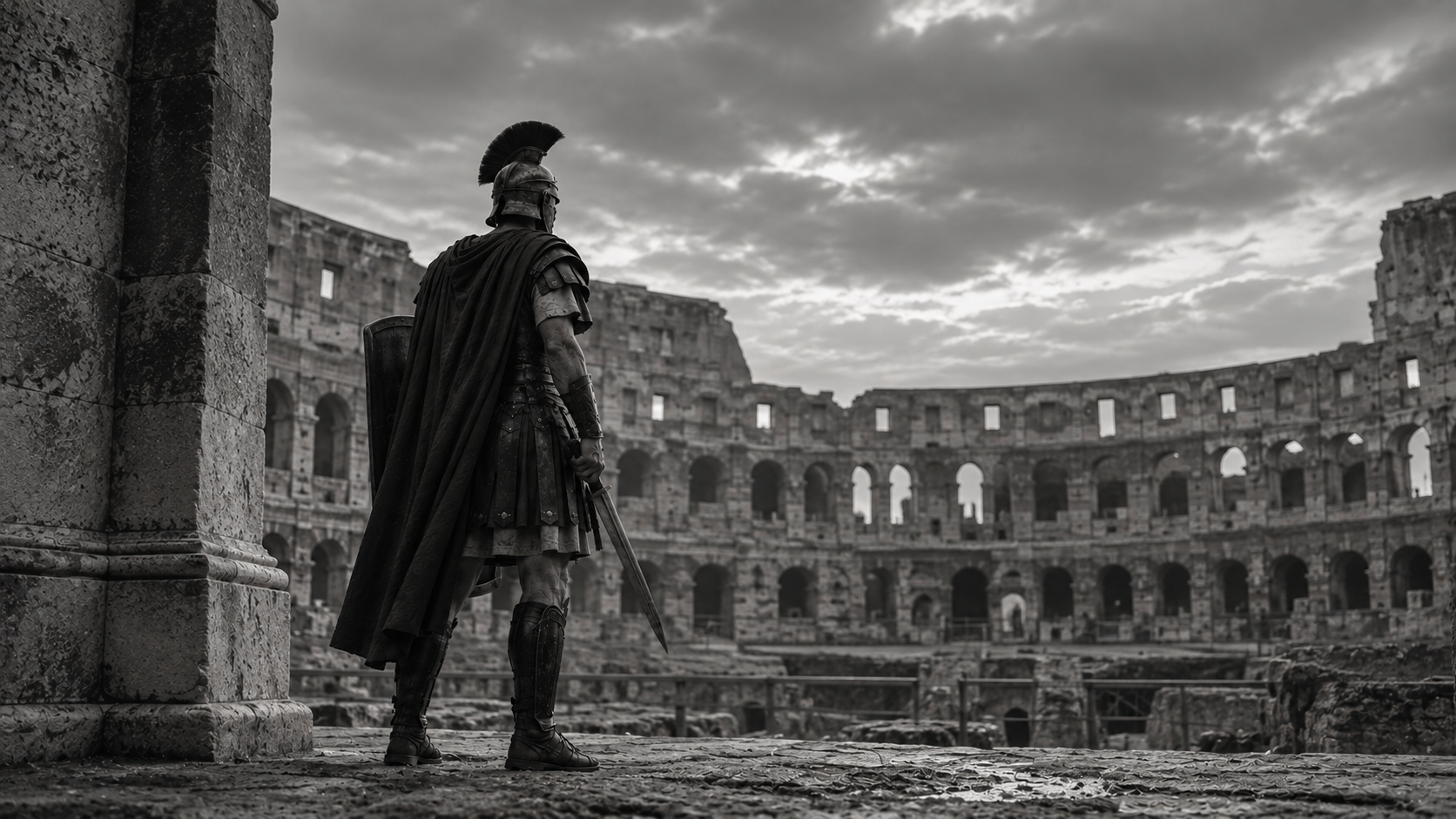
Paul ends the book of Ephesians with words that should shake us from complacency: “Finally, my brethren, be strong in the Lord, and in the power of his might.”
Then he tells us why. There is a war taking place.
We Are In A Spiritual War
Paul writes that we wrestle “not against flesh and blood, but against principalities, powers, rulers of darkness", and “spiritual wickedness in high places.”
That distinction matters enormously. Christianity does not allow us to look at another human being and declare, “There is my ultimate enemy.”
The Muslim is not my ultimate enemy. The progressive activist is not my ultimate enemy. The confused young person struggling with his identity is not my ultimate enemy. The woman who has had an abortion is not my ultimate enemy. The person screaming insults at Christianity is not my ultimate enemy.
They are human beings created in the image of God. They are people Christ died to save.
But that does not mean the ideas, movements, lies, and evils influencing our world should be ignored.
Radical Islamist terrorism should be confronted and named for what it is. We must reject Islam as false and oppose any ideology that justifies terrorism, oppression, or murder. We must refuse the lie that men can become women or that God somehow made a mistake when He created humanity male and female. We must declare that a child growing inside the womb possesses God-given human value and should not be intentionally killed. We must oppose ideologies that divide human beings according to race, sex, grievance, victimhood, or collective guilt.
We can forgive those who hate us while refusing to surrender truth to make them comfortable.
Loving people does not require affirming lies; and recognizing spiritual warfare does not require pretending that evil has no earthly consequences.
Remember What Evil Can Do
Twenty-five years ago, Americans watched evil unfold before their eyes.
Most of us can still picture the towers. The smoke. The firefighters running toward what everyone else was running away from. The families waiting for phone calls that would never come. The realization that thousands of ordinary people had gone to work that morning having no idea they would never return home.
September 11 should never become merely another historical anniversary. We should remember the victims. We should remember the first responders. We should remember the courage. We should remember the unity that briefly swept across a wounded country. And we should remember why it happened.
There is danger in a society that becomes so uncomfortable naming evil that it eventually loses the ability to recognize it.
“Never forget” cannot simply mean posting a flag once every September. It means remembering that civilization is fragile.
Liberty requires vigilance. Peace is not guaranteed. Evil does not disappear because civilized people would prefer not to think about it.
The assassination of Charlie Kirk carries another warning for our generation.
Whatever someone thought of his politics, Charlie believed ideas should be debated publicly. He walked onto college campuses where thousands disagreed with him and invited them to a microphone. He argued. He persuaded. He preached. He talked about politics, culture, morality, America, and Jesus Christ.
And one year ago, his voice was violently silenced.
For Christians who watched his public witness, that anniversary carries particular weight because the temptation after witnessing something like that is understandable. Be quieter. Be safer. Say less. Avoid controversy. Keep your faith private. Don't upset anyone. Don't stand out.
But Ephesians 6 gives exactly the opposite command: stand.
God Never Told Us to Retreat
Paul does not tell the Christian soldier to conquer the world through personal strength. He does not tell us to become louder than everyone else. He does not tell us to become cruel. He does not tell us to hate.
He says: Stand. And then God gives us everything necessary to do it.
Put on the belt of truth.
That matters in a civilization increasingly willing to redefine reality according to preference.
Truth does not become false because it becomes unpopular. Men are men. Women are women. Unborn children are human beings. Marriage and family matter. Human beings possess inherent dignity because we are created by God. Sin destroys. Christ saves. Truth remains truth whether ten people believe it or ten million people reject it.
Our job is not to manufacture truth. Our job is to stand in it.
Put on the breastplate of righteousness.
This may be the part cultural Christians most desperately need.
We cannot condemn the darkness while privately becoming comfortable with it. A Christian who wants to confront cultural decay must first confront the sin in his own life. Pornography. Dishonesty. Pride. Adultery. Greed. Drunkenness. Bitterness. Hatred. Secret compromise.
Political courage without personal holiness is not Christian courage. Before we point toward Washington, Hollywood, universities, media organizations, corporations, or activists, we ought to ask whether righteousness governs our own homes.
The battle begins much closer than we think.
Put on the shoes of the Gospel.
This prevents Christian cultural engagement from becoming nothing but perpetual outrage.
We aren't here merely to tell the world what we're against. We possess the good news that Jesus Christ saves sinners!
That means the confused person can be redeemed. The abortionist can be redeemed. The radical can be redeemed. The addict can be redeemed. The political enemy can be redeemed.
We can oppose someone's ideology while desperately wanting Christ to save his soul. That distinction separates Christian conviction from tribal hatred.
Take the shield of faith.
Fear will come. Fear of being mocked. Fear of losing friends. Fear of losing opportunities. Fear of being labeled. Fear of being attacked online. And, after what happened to Charlie Kirk, perhaps even the realization that speaking publicly can carry far more serious consequences.
Faith does not promise us that obedience will always be safe. It reminds us that God remains sovereign when it isn't.
Put on the helmet of salvation.
The world will constantly try to tell you who you are based on political party, race, sexuality, income, social media followers, status.
But the Christian's deepest identity is settled somewhere else — in Christ.
When you know whose you are, the approval of the crowd becomes far less powerful.
Take up the sword of the Spirit.
Not memes. Not political slogans. Not whatever our favorite commentator said yesterday. Take up The Word of God.
Christians cannot fight spiritual battles while remaining biblically illiterate.
Scripture shapes our understanding of truth, justice, human dignity, sexuality, marriage, government, forgiveness, courage, righteousness, mercy, and evil.
If our worldview is formed more by cable news, podcasts, X, Facebook, or political personalities than by Scripture, we are walking onto the battlefield while leaving our sword at home.
And Paul adds one more weapon that is easily forgotten: Prayer. None of this can be accomplished through human determination alone.
Remember. Then Stand.
There is a temptation when anniversaries like these arrive to spend a day remembering and then return immediately to normal life. But remembrance should produce something.
Twenty-five years after September 11, remember that evil exists.
One year after Charlie Kirk's assassination, remember that courage has a cost.
And every day as Christians, remember that our culture desperately needs men and women willing to stand.
Not hateful Christians. Not terrified Christians. Not perpetually angry Christians. Not Christians who confuse Republican politics with the Kingdom of God.
Not Christians who hide behind “love” as an excuse for cowardice.
Christians grounded in truth. Christians pursuing righteousness. Christians carrying the Gospel. Christians living by faith. Christians secure in salvation. Christians armed with Scripture. Christians dependent upon prayer.
There will always be pressure to retreat. There will always be another cultural demand that Christians compromise just one more thing. Another truth we're told has become too offensive. Another biblical teaching we're expected to reinterpret. Another evil we're supposed to politely ignore. Another moment when silence would be easier.
Scripture does not tell us to find the safest ground; it tells us to stand our ground. Not because we are strong enough, our political movement is powerful enough, or because circumstances favor us. But because our strength comes from somewhere greater. “Be strong in the Lord, and in the power of his might.”
Remember the fallen. Remember what evil is capable of.
Love your neighbor. Speak the truth.
Preach the Gospel. Refuse the lie.
Put on the whole armor of God; and when the pressure comes, stand.